The Thrawn Trilogy a Golden Standard
I have to confess something. My recent journey into the newer lore of a galaxy far, far away was fueled by a sense of disappointment. Like many of you, I was left feeling a bit unhappy with the latest canon movie trilogy. The choices felt disjointed, and the sudden emergence of a First Order with infinite money, impossibly massive superweapons, and overwhelming power appearing out of nowhere felt... well, just a bit weird.
Yes, I know the newer canon books and comics are currently working overtime to explain how the Empire hid those resources in the Unknown Regions. But for me, that retroactive patching doesn't fix the core issue. Those movies can never truly be repaired as such; the emotional resonance and logical progression were simply lost on the screen.
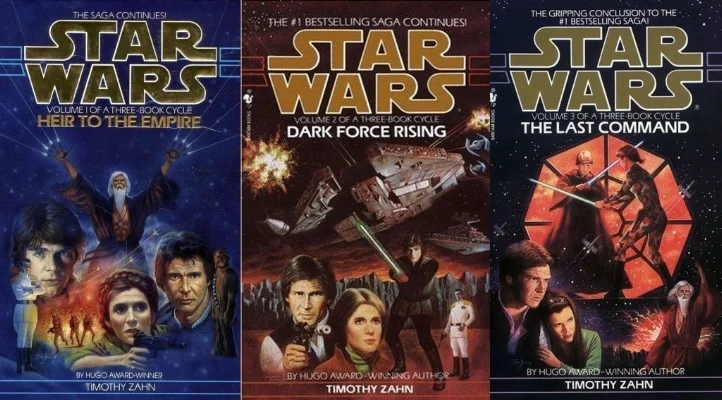
That disconnect is exactly what drove me to seek out the stories that got it right the first time. When diving into the vast and sometimes overwhelming expanse of science fiction literature, few works hold up quite as steadfastly as Timothy Zahn's original Thrawn Trilogy (Heir to the Empire, Dark Force Rising, and The Last Command). Released in the early 1990s, these novels essentially birthed the modern Star Wars Expanded Universe (now known as Legends) and set a benchmark that few stories have managed to clear.
I loved reading the old Thrawn trilogy, and the Legends story overall reminded me of what a logical, earned continuation of the original films actually looks like.
The Craft of Strategy over Brute Force
What makes Zahn's writing so enduring is a fundamental shift in how conflict is framed. In stark contrast to the sequel movies where villains rely on magically conjured fleets, the remnants of the Empire in Zahn's books are actually struggling. They are broke, fractured, and desperate.
Unlike typical space operas where galaxy-spanning wars are won by sheer military might, overwhelming fleet sizes, or mystical energy fields, Grand Admiral Thrawn operates entirely on art, psychology, and tactical observation.
"To defeat an enemy, you must know them. And not simply their battle tactics, but their history, their art, their philosophy."
Thrawn doesn't win because he has more Star Destroyers; he wins because he analyzes an alien species' sculptures, paintings, or historical artifacts to predict their exact tactical responses. It turns military strategy into an intellectual chess match, giving the antagonists a level of depth rarely seen in pulp sci-fi.
Expanding the Galaxy Beyond the Empire
Another triumph of the trilogy is how it enriched the lore without shrinking the universe. Instead of just recycling familiar faces from the original trilogy (Luke, Leia, Han, Chewie and Lando), Zahn introduced unforgettable original characters that instantly felt like they belonged in the galaxy:
- Grand Admiral Thrawn: A brilliant, blue-skinned Chiss tactician devoid of the xenophobic inner circle's typical myopia.
- Mara Jade: A complex, conflicted former Emperor's Hand harboring a deep grudge against Luke Skywalker.
- Captain Pellaeon: The career military officer learning what it truly means to serve under a master strategist.
- Joruus C'baoth: A deranged, power-hungry clone Jedi Master adding an unpredictable, volatile element to the political landscape.
A Lasting Blueprint for Worldbuilding
Decades after their initial publication, these books remain a masterclass in pacing, tone, and reverence for source material. They respected the original cinematic feel while expanding the canvas into something richer, darker, and infinitely more thoughtful.
Whether you are an older fan looking to wash the taste of the recent films away, or a new reader wondering where the true heart of the extended lore beats, it is absolutely worth a read. For anyone looking to step away from modern algorithmic noise and dive into a sweeping, tangible space opera, the Thrawn Trilogy is where the journey should begin.